
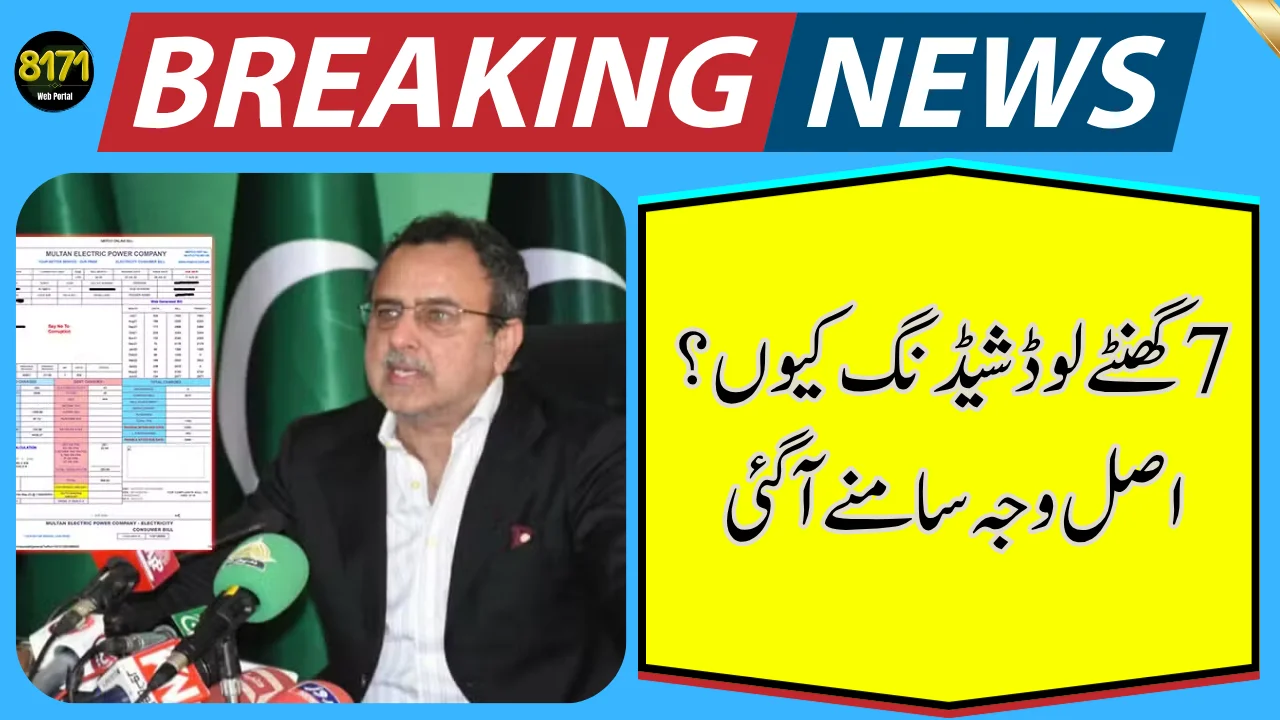
Pakistan’s ongoing electricity crisis has taken a serious turn, with daily power outages stretching up to 6 to 7 hours in many areas. Now, Federal Power Minister Awais Leghari has explained the actual formula behind load shedding — and the numbers are raising concern.
According to him, every 500 to 600 megawatts shortfall results in around one hour of load shedding, which is why outages have become so long across the country.
⚡ The “Math” Behind Load Shedding
The government is calculating power cuts based on shortage:
- 500–600 MW deficit = 1 hour load shedding
- Current shortfall: around 3,400 MW
That’s why many areas are experiencing 6–7 hours of outages daily.

📉 Why the Power Crisis Is Getting Worse
Several factors are hitting Pakistan’s power system at the same time:
- Reduced electricity generation
- Fuel shortages
- Increased demand during peak hours
The situation has become more complicated due to multiple system constraints.

🔥 LNG Plants Almost Shut Down
One of the biggest shocks:
- LNG plants capacity: 6,000 MW
- Current production: only ~500 MW
This massive drop is due to fuel supply issues, removing a huge chunk of electricity from the grid.

💧 Hydropower Also Declining
- Hydropower output is lower than last year
- Less water availability means less cheap electricity
This adds more pressure on the system.

🛢️ Temporary Fix – But Not Enough
- Furnace oil plants are being used
- But they are expensive and limited
Even after using them, the gap remains large.
⚠️ What Govt Is Asking From Public
The minister has urged citizens to:
- Reduce electricity usage
- Avoid unnecessary consumption
- Help ease pressure on the grid
🧾 Final Take
The explanation makes one thing clear — Pakistan’s load shedding is not random, but directly linked to the power shortfall. However, with fuel issues and reduced generation still unresolved, the crisis may continue in the coming days.